
How to Choose the Right Corporate Fleet in Egypt:
Choosing the right corporate fleet in Egypt is not simply about selecting vehicles. For businesses managing employees, projects, client meetings, and daily operations, the right corporate car rental and fleet management strategy can directly affect cost control, productivity, and operational efficiency.
Different employee roles require different mobility solutions.
A sales representative driving daily across Cairo may need a practical sedan, while a field engineer visiting construction or industrial sites may require an SUV. A project team may be better served by an MPV rather than several individual cars.
The key principle is simple:
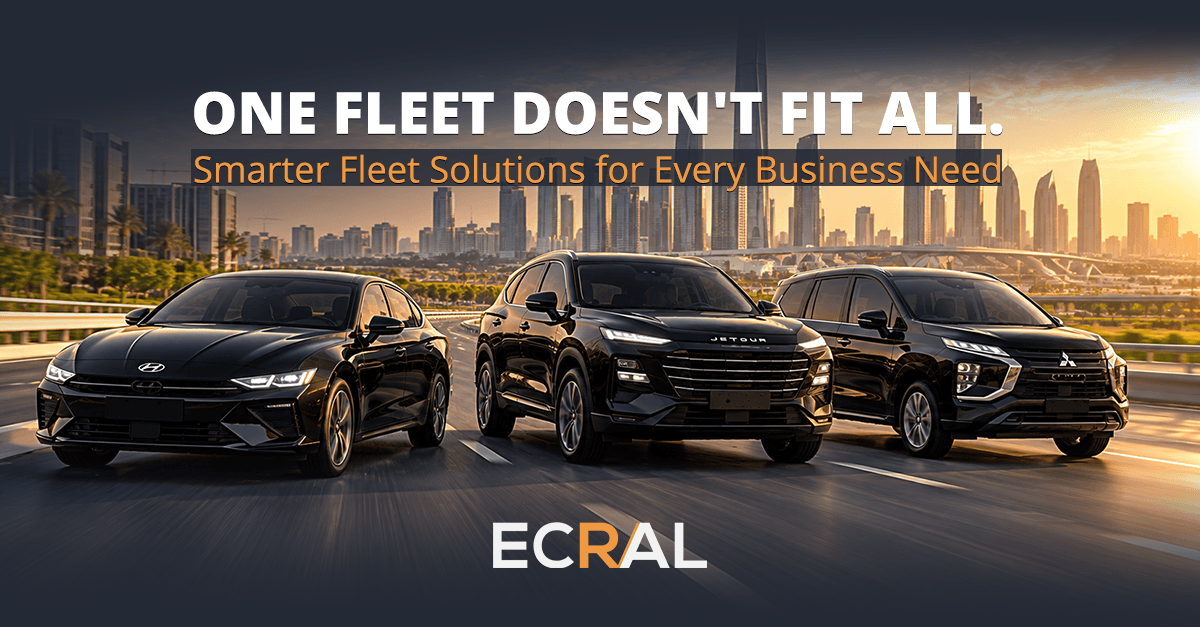
One fleet does not fit all.
Matching vehicle categories to actual employee needs can help businesses improve efficiency, control costs, and build a more flexible corporate mobility strategy.
• Start With the Employee Role
Before choosing a vehicle, companies should first understand how it will actually be used.
Key factors include:
• Monthly mileage
• City or intercity travel
• Number of passengers
• Luggage or equipment requirements
• Road and site conditions
• Permanent or project-based use
• Chauffeur requirements
Understanding these factors helps businesses identify the right vehicle category before comparing individual models or rental costs.
• Matching Vehicles to Different Employee Roles
• Sales and Business Development Teams
Sales employees often cover high mileage and make frequent client visits.
For many sales teams, a practical sedan provides a good balance between:
• Fuel efficiency
• Reliability
• Comfort
• Professional appearance
• Operating cost
However, monthly rental price should not be the only consideration.
Expected mileage, travel patterns, and actual vehicle utilization should also influence the decision.
• Managers and Executives
Managers and executives may require additional comfort and a professional vehicle for client meetings, business travel, events, and airport transfers.
Depending on company policy and operational requirements, suitable options may include:
• Upper-category sedans
• SUVs
• Chauffeur-driven vehicles
The vehicle should ultimately match the employee's actual mobility requirements rather than simply their job title.
• Field Engineers and Technical Teams
Employees visiting factories, construction sites, industrial areas, warehouses, or remote locations may require a different type of vehicle.
Businesses should consider:
• Ground clearance
• Road conditions
• Equipment and luggage space
• Passenger capacity
• Reliability
• Long-distance comfort
In many cases, an SUV or another suitable vehicle category may be more practical than a standard sedan.
The lowest-cost vehicle is not always the most cost-effective choice if it does not support the employee's daily responsibilities.
• Long-Term Car Rental for Projects in Egypt
Temporary projects can create additional mobility requirements without necessarily justifying permanent additions to a company-owned fleet.
Companies may require additional vehicles for:
• Construction projects
• Consulting assignments
• New branches
• Temporary workforces
• Regional operations
• Short- or medium-term business projects
Long-term corporate car rental can allow businesses to adjust vehicle numbers and categories according to project duration and operational requirements without purchasing permanent fleet assets.
This can be particularly valuable for project-based organizations where mobility requirements change over time.
• Group Transportation and Business Visitors
Not every corporate mobility requirement needs an individual vehicle.
MPVs and larger passenger vehicles can be more efficient for:
• Project teams
• Employee transportation
• Airport transfers
• Corporate delegations
• Group business travel
• Visiting international teams
Companies that regularly receive international managers, consultants, technical specialists, investors, or business partners can also include visitor transportation within their overall corporate mobility strategy.
This can reduce last-minute arrangements and simplify transportation planning.
• Consider Mileage and Travel Patterns
Mileage can have a significant impact on overall fleet cost.
A sales representative may travel thousands of kilometers each month, while an executive may primarily travel within Cairo.
Companies evaluating corporate car rental in Egypt should consider:
• Included monthly mileage
• Additional kilometer charges
• Expected project mileage
• City versus intercity travel
• Vehicle utilization
For city driving, priorities may include fuel efficiency, maneuverability, and comfort in traffic.
For regular intercity travel, reliability, stability, luggage capacity, and long-distance comfort may become more important.
• Create Clear Corporate Fleet Categories
Companies managing larger fleets can simplify fleet management by creating standardized vehicle categories.
For example:
Category A - Operational Sedan
Suitable for sales teams, administrative employees, and general business use.
Category B - Management Sedan
Suitable for managers and client-facing roles.
Category C - SUV
Suitable for executives, project managers, engineers, and field teams.
• Look Beyond the Monthly Rental Price
The monthly rental rate is only one part of the total mobility cost.
When comparing corporate fleet solutions, businesses should also consider:
• Fuel
• Maintenance and repairs
• Insurance
• Vehicle downtime
• Replacement vehicle support
• Additional mileage
• Fleet administration
A lower monthly rental rate does not necessarily mean a lower overall mobility cost.
The objective should be to understand the total cost and operational impact of keeping employee’s mobile.
• Keep Your Corporate Fleet Flexible
Business requirements rarely remain static.
New projects begin, teams expand, locations change, and transportation requirements evolve.
A flexible corporate mobility structure should make it possible to:
• Add vehicles when requirements increase
• Adjust vehicle categories
• Extend rental periods
• Support temporary projects
• Add group transportation
• Arrange chauffeur-driven services
For growing and project-based businesses, this flexibility can reduce the need to restructure an entire fleet whenever operational requirements change.
• What to Look for in a Corporate Car Rental Provider in Egypt
Choosing the right vehicles is only part of the decision. Choosing the right mobility partner is equally important.
Businesses should evaluate:
• Available vehicle categories
• Maintenance support
• Replacement vehicle procedures
• Mileage terms
• Contract flexibility
• Account management
• Service response
• Geographic coverage
• Chauffeur-driven options
• Corporate support
The right provider should support the company's wider mobility requirements rather than simply supply vehicles.
• ECRAL Corporate Car Rental & Fleet Management Solutions in Egypt
ECRAL provides corporate car rental and mobility solutions in Egypt designed around different operational requirements.
Solutions include:
• Long-term corporate car rental
• Sedans, SUVs, family cars
• Self-drive vehicles
• Chauffeur-driven services
• Airport transfers
• Maintenance coordination
• Replacement vehicle support
• Project-based mobility
• Dedicated corporate support
This allows businesses to structure their fleet around actual operational requirements instead of applying the same mobility solution to every employee.
• Frequently Asked Questions About Corporate Car Rental in Egypt
• What is the best vehicle for a corporate sales team?
For many sales teams, a sedan provides a practical balance between operating cost, fuel efficiency, comfort, and professional appearance.
However, the final choice should also consider expected monthly mileage and travel patterns.
• Should companies choose sedans or SUVs for executives?
Both can be suitable.
Sedans may provide an effective balance of comfort and efficiency for regular business travel, while SUVs may offer additional space and flexibility.
The right choice depends on operational requirements and company fleet policy.
• Is long-term car rental suitable for project-based companies?
Yes. Long-term car rental in Egypt can be particularly useful when companies require vehicles for a defined project period.
It allows vehicle requirements to be aligned with project duration without necessarily purchasing permanent fleet assets.
• How can businesses reduce corporate fleet costs?
Companies can improve fleet efficiency by matching vehicles to employee roles, monitoring mileage, reducing underused vehicles, standardizing vehicle categories, and evaluating total mobility cost rather than monthly rental price alone.
• What should businesses look for in a corporate car rental company in Egypt?
Businesses should evaluate vehicle availability, maintenance support, replacement procedures, mileage terms, contract flexibility, geographic coverage, response times, and dedicated corporate support.
• One Fleet Does Not Fit All
An effective corporate fleet should reflect how a business actually operates.
Sales teams, executives, engineers, project teams, and business visitors have different transportation requirements.
The objective is not to provide the largest number of vehicles.
It is to provide the right vehicle for the right business need.
ECRAL provides corporate car rental, long-term rental, and fleet mobility solutions in Egypt for businesses with different operational requirements.
Whether your company needs vehicles for daily operations, employee mobility, a temporary project, executive transportation, or a structured long-term fleet, ECRAL can develop a mobility solution around your business requirements.
Looking for a corporate car rental solution in Egypt?
Contact ECRAL to discuss a customized fleet solution for your business.
🌐